
English| USD
Suggested for you
More currencies
Choose a language
The corridor between the two cities is a modern, sealed, well-policed highway — the real variables are paperwork, fuel gaps and the queue at immigration. This is it safe to drive from dubai to muscat guide sets out what the road is actually like, where the friction sits, and how experienced travellers plan around it.
Quick answer
Yes. The drive is generally safe: the route runs on dual-carriageway asphalt via the Hatta–Al Wajajah Border Crossing on the E44, open 00:00–23:59 every day. The caveats are administrative rather than physical — an Oman entry visa fee of around 50 AED, mandatory vehicle insurance valid in Oman, and immigration queues that swell sharply outside the 00:00–06:00 window.
Fewer than 500 kilometres of asphalt separate the Burj Khalifa from the Corniche at Mutrah, and almost every metre of it is engineered to a standard that would not embarrass northern Europe. That single fact reframes the question most travellers arrive with. When people ask is it safe to drive from dubai to muscat, they are rarely worried about landslides or lawlessness — the Hajar Mountains are stable, the highway is patrolled, and emergency response along the E44 corridor is organised. What actually derails journeys is quieter: an expired insurance rider, a rental agreement with no cross-border clause, a fuel tank that emptied somewhere between Hatta and Sohar. The crossing itself is the hinge of the whole trip. Hatta–Al Wajajah is the busiest of the Dubai-side border posts, and its rhythm shapes everything either side of it. Immigration officers process departures and arrivals in sequence, meaning a vehicle clears UAE exit formalities before entering Omani jurisdiction — two separate desks, two separate stamps, one continuous ribbon of tarmac. Travellers who treat the border as a single checkpoint tend to underestimate it. Those who treat it as two administrative events, each with its own queue, plan far better. Beyond Al Wajajah the landscape shifts: wadis, date plantations, the long descent toward the Batinah plain, and speed enforcement that is stricter than most visitors expect. Road safety in Oman is a matter of discipline rather than luck. Radar cameras are frequent and unforgiving, overtaking on the hard shoulder is penalised, and camel crossings on unfenced desert stretches are a genuine night-driving hazard. The Royal Oman Police publishes entry requirements through its official portal, and the documentation it lists is not negotiable at the barrier. Anyone still weighing whether is it safe to drive from dubai to muscat should separate the two halves of the answer: the physical drive is straightforward for a competent driver, while the paperwork and the queue are where journeys go wrong. Many visitors resolve that split by handing the border logistics to a chauffeured Dubai to Muscat transfer, where the operator manages insurance, permits and crossing timings. Others drive themselves and simply prepare thoroughly. Both are reasonable. The dedicated sections on this page cover documents, costs, route detail and the arrival windows worth targeting — read them before setting a departure time, not after.
“The physical drive is straightforward for a competent driver; the paperwork and the queue are where journeys go wrong.”
The Dubai–Muscat drive is a straightforward highway run, but most problems come from paperwork and vehicle readiness rather than the road itself. These are the errors that actually strand travellers at the Hatta-Al Wajajah crossing or on the desert stretch beyond it.
Driving a rental car without cross-border permission
Ask the rental company for written Oman authorisation and an Oman-valid insurance extension before collection. Most standard UAE rental agreements void cover the moment the vehicle leaves the country.
Assuming UAE motor insurance covers you inside Oman
Buy an Oman insurance orange card at the border or arrange extended cover with your insurer in advance. Driving uninsured in Oman is an offence and leaves you personally liable after any collision.
Ignoring livestock and camels on open desert road
Reduce speed after dark on unlit stretches and scan the verges. Camel and goat strikes are the most common serious accident type on this corridor.
Starting the drive with a half-empty fuel tank
Fill up in Hatta before the crossing and again after it. Service stations thin out considerably between the border and Sohar.
Travelling without a working phone plan for Oman
Enable roaming or buy an Omani SIM, since UAE numbers stop working past the border and you may need to call the crossing on +968 2284820.
Skipping a basic vehicle check before departure
Inspect tyre pressure, spare wheel, coolant and brakes. Summer surface temperatures on the E44 and Omani highways punish underinflated or worn tyres.
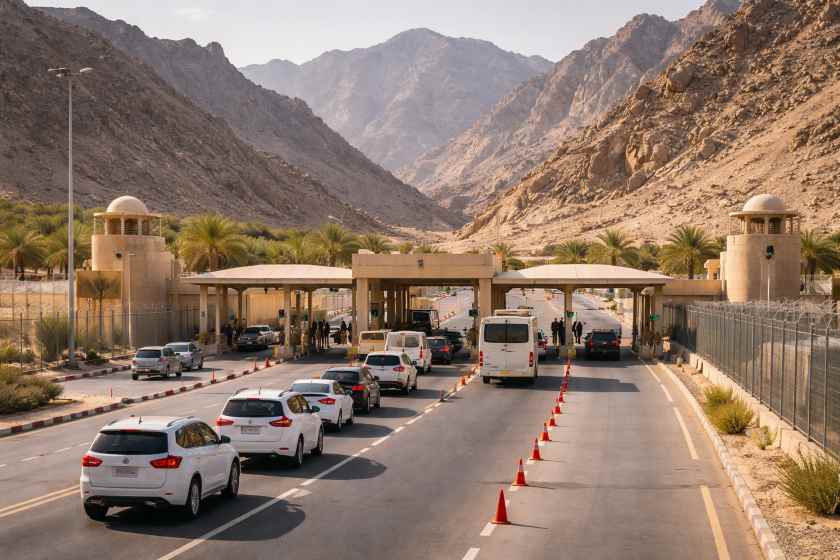
Driving from Dubai to Muscat involves navigating the E44 highway toward the Hatta-Al Wajajah border crossing. This route remains the primary transit corridor for travelers moving between the two cities by road.
E44 Road to Hatta-Al Wajajah Border Crossing
E44 Road to Hatta-Al Wajajah Border Crossing
To ensure a smoother transition, plan to arrive at the Hatta-Al Wajajah Border Crossing between 00:00–06:00. This arrival window helps bypass peak congestion and minimizes wait times during the immigration process.
To ensure a smooth transition, the best arrival window is 00:00–06:00, which avoids peak congestion and minimizes wait times at the border. Selecting cooler months or early morning hours reduces exposure to extreme heat and heavy traffic flows.
Mild, 20°C–28°C
This period offers the most comfortable driving conditions and stable temperatures for cross-border travel.
Warm, 30°C–38°C
Traffic increases during these shoulder months, requiring careful planning to avoid peak daytime heat.
Extreme, 40°C–45°C
High temperatures and peak summer travel volume can lead to longer delays and mechanical strain on vehicles.
—
This remains the optimal daily window to clear immigration efficiently and avoid heavy commercial traffic.
Verdict: The safest and most efficient time to drive is during the cooler months of November to March, arriving at the border between 00:00 and 06:00.
The Hatta-Al Wajajah border crossing operates continuously to accommodate travelers between Dubai and Muscat. The facility remains open daily throughout the week.
Most border problems at Hatta-Al Wajajah come down to missing paperwork, so sort these documents before you set off.
Everything you need to know about is it safe to drive from dubai to muscat
Driving between these cities is generally secure, provided you remain vigilant on the E44 highway and follow all traffic regulations. Many travelers find that asking is it safe to drive from Dubai to Muscat reveals that the route is well-maintained and heavily monitored.
Yes, your rental car insurance must explicitly cover cross-border travel into Oman to be valid. Verify with your agency, as many standard UAE rental policies do not cover international border crossings.
The best arrival window is 00:00–06:00 to avoid peak congestion and long wait times at immigration. Planning your route during these hours ensures a more efficient transit through the Hatta-Al Wajajah border.
Yes, many families consider this a reliable route, and considering is it safe to drive from Dubai to Muscat often leads parents to choose private transfers for added comfort. Ensure you have proper car seats and ample supplies for the desert terrain.
You must carry a valid passport, a printout of your e-visa from the official site, and vehicle registration documents. Without these, you will be denied entry at the Hatta-Al Wajajah crossing.
The entrance fee is 50 AED, though this amount is approximate and varies by your nationality and residency status. Always check the official ROP website for the most current fee schedule before your journey.
While the roads are paved and maintained, driving at night requires extra caution due to limited lighting and potential wildlife on remote stretches. When researching is it safe to drive from Dubai to Muscat, many experts suggest daylight travel for better visibility.
Most UAE rental agencies prohibit taking vehicles across the border to Oman due to insurance limitations. You should arrange a dedicated private transfer service that holds the necessary permits for cross-border operations.
Muscat Airport Private Transfer
Read more GuideCan You Drive From Dubai to Muscat?
Read more Tickets & toursMuscat to Dubai Transfer
Read more GuideHow to Get from Dubai to Muscat
Read more GuideDubai to Muscat Transfer Cost
Read more Tickets & toursPrivate Taxi & Car Service
Read more